Where SRHR Stands at COP31: Climate Change Linked to Maternal Complications
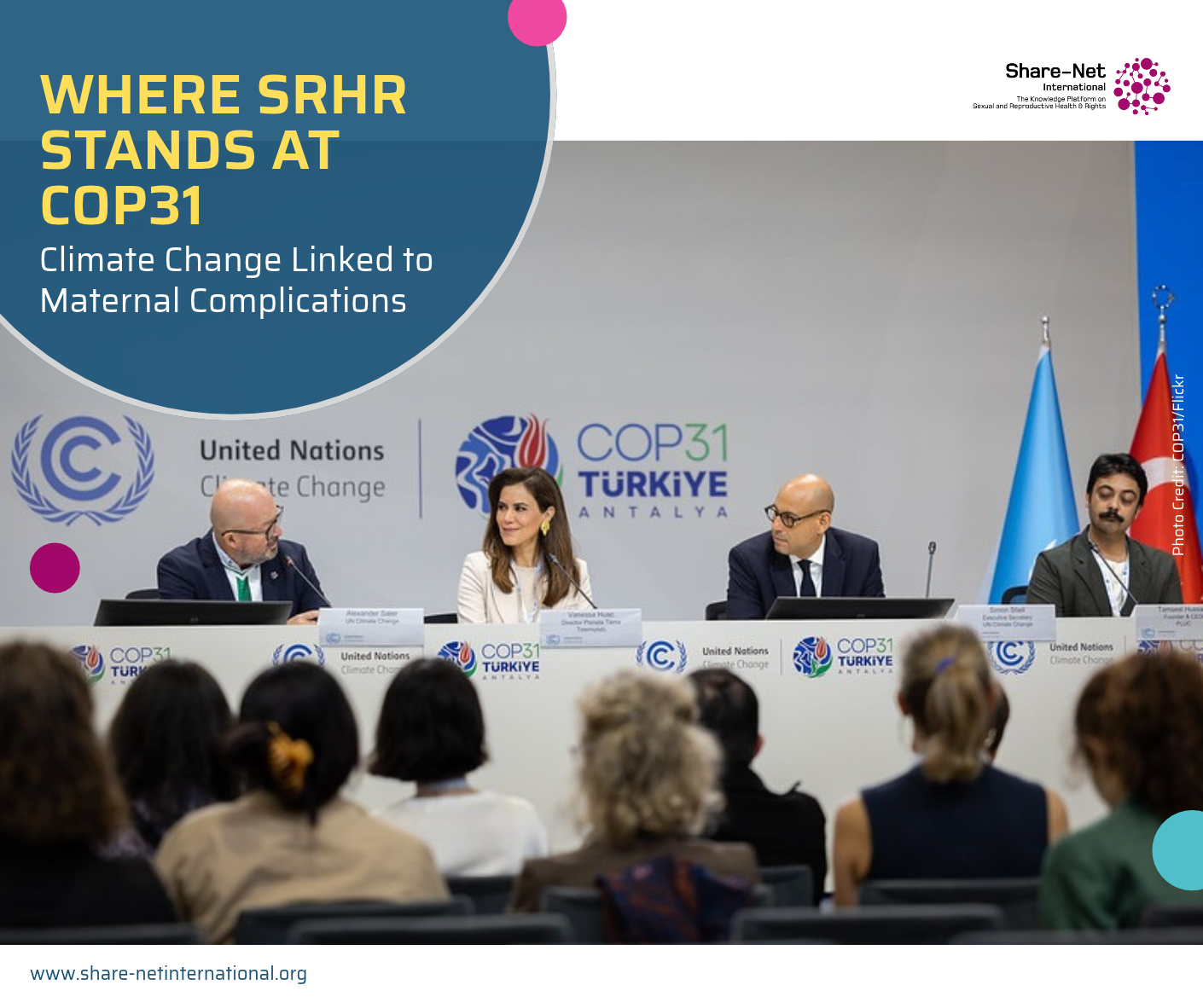
The 31st UN Climate Change Conference (COP31) is taking place from 9 to 20 November 2026 in Antalya, Türkiye. It opened on 9 November with a Health Day. Türkiye launched the Antalya Initiative for Health Resilience, a voluntary platform for sharing knowledge and experience on resilient health care. The Presidency also made “Dynamic and Resilient Health Systems” a priority theme of its Action Agenda. The question for the sexual and reproductive health and rights (SRHR) community is whether women and girls will be named in that agenda, and funded within it.
The evidence is getting harder to ignore. A Wellcome survey of 1,000 maternity health workers in five countries found that 98 percent had cared for a pregnant woman, and 99 percent for a baby, whose health they believed extreme heat had affected. Around 76 percent reported more heat-related problems for fetal or newborn health. Research suggests the odds of preterm birth rise about 5 percent for each 1°C of warming, with the greatest risk likely in low- and middle-income countries. UN climate chief Simon Stiell described this as a new fault line in the climate crisis.
The finance is not there yet. WHO estimates that only about 0.5 percent of multilateral climate finance has gone to health. That is the gap UNFPA’s 12 November side event, “Resilient Health for Mothers and Newborns: Financing Climate-Resilient SRHR and Protection Systems,” set out to address. OHCHR spoke alongside UNFPA, which keeps the human-rights framing in view. There is some money moving. The Climate and Health Funders Coalition has awarded more than $225 million of its original $300 million to 20 programmes, though the coalition’s focus is heat, air pollution and infectious disease rather than SRHR itself. WHO’s Director-General told ministers that health belongs in the negotiated text and should be an explicit eligibility area for climate finance.
Protection systems matter as much as clinics. Climate shocks do not only close clinics; they cut the links that keep women and girls safe. UNFPA notes that when floods or cyclones displace communities, damage clinics or block roads, maternal health and protection services are often the first to be lost. Longer distances to reach water raise the risk of sexual and gender-based violence, and a lack of clean water and menstrual products undermines dignity. Extreme heat can also affect conception and raise the risk of adverse maternal and neonatal outcomes. WHO adds that health facilities now face a 41 per cent higher risk of damage from extreme weather than in 1990, which is why reliable power, water and protection services must be funded together.
What we are asking for-
- Include pregnant women, adolescents and newborns in national adaptation and health plans. Wellcome has also called for WHO clinical guidance on heat, pregnancy and the postpartum period.
- Adopt WHO’s new heat and maternal, newborn and child health indicators in routine health data.
- Fund continuity of SRHR services and safe spaces in disasters, not only facilities.
Declarations will not be enough. Implementation is what protects people. COP31 runs until 20 November, and the SRHR community still has time to push for those words to reach the final text.
Sources:
- https://www.iisd.org/es/node/19475
- https://theprint.in/environment/cop31-climate-crisis-health-crisis-launches-new-initiative-day-1/3095023/
- https://www.eco-business.com/zh-hans/news/pregnant-women-with-no-cool-place-to-go-face-rising-heat-risks-un-climate-chief-warns/
- https://unfccc.int/event/unfpa-resilient-health-for-mothers-and-newborns-financing-climate-resilient-srhr-and-protection
- https://www.unfpa.org/press/unfpa-cop31-protecting-health-rights-and-futures-women-and-young-people-changing-climate
- https://www.aa.com.tr/en/greenline/climate-change/unfpa-calls-for-gender-equality-issues-to-be-addressed-at-cop31/1830804